Thank you for visiting nature.com. You are using a browser version with limited support for CSS. To obtain the best experience, we recommend you use a more up to date browser (or turn off compatibility mode in Internet Explorer). In the meantime, to ensure continued support, we are displaying the site without styles and JavaScript.
You can also search for this author in PubMed Google Scholar Semi Conductor Device
You can also search for this author in PubMed Google Scholar
You have full access to this article via your institution.
Listen to the latest from the world of science, with Nick Petrić Howe and Shamini Bundell. Your browser does not support the audio element. Download MP3
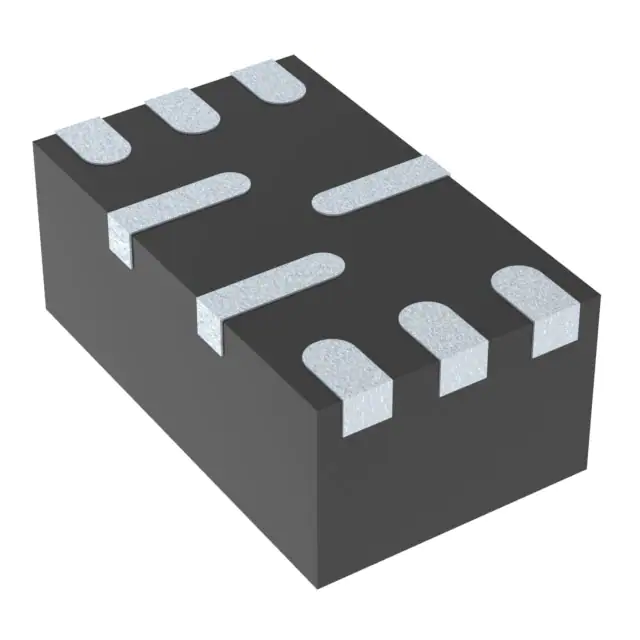
In the past, increasing the speeds of electronics required designing smaller components, but further reductions in size are being hampered by increasing resistance. To get around this, researchers have demonstrated a ‘metadevice’, which prevents resistance building up by concentrating the flow of signals into specific regions of the device. The hope is that this meta-method could be used to create even smaller electrical components in the future.
Research article: Nikoo & Matioli
How waiting times for services are higher for people in the US with low incomes, and how your brain hears an alarm while you’re asleep.
Research Highlight: Who wastes more time waiting? Income plays a part
Research Highlight: Noise shatters deep sleep thanks to dedicated brain circuit
In the last ten years, levels of social media use and reported levels of mental health issues among adolescents have both increased. There is much concern that these trends are linked, but hard evidence has been hard to come by. So how can scientists get a better understanding of what’s going on? In a Comment article for Nature, researchers argue that, rather than lumping ‘young people’ into one homogeneous group, future studies should consider where they are in terms of their development, as this could influence the potential impacts of social media use.
Comment: How social media affects teen mental health: a missing link
We discuss some highlights from the Nature Briefing. This time, we discuss self-burying devices that can plant seeds in remote areas from the air, and scientists’ reactions to a talk by CRISPR-baby researcher He Jiankui.
Nature Video: This device corkscrews itself into the ground like a seed
Nature News: Disgraced CRISPR-baby scientist’s ‘publicity stunt’ frustrates researchers
Subscribe to Nature Briefing, an unmissable daily round-up of science news, opinion and analysis free in your inbox every weekday.
Never miss an episode. Subscribe to the Nature Podcast on Apple Podcasts, Google Podcasts, Spotify or your favourite podcast app. An RSS feed for Nature Podcast is available too.
doi: https://doi.org/10.1038/d41586-023-00467-6
How social media affects teen mental health: a missing link
Disgraced CRISPR-baby scientist’s ‘publicity stunt’ frustrates researchers
Electronic metadevices for terahertz applications
Water splitting with silicon p–i–n superlattices suspended in solution
How social media affects teen mental health: a missing link
The Milky Way in spellbinding detail and more — January’s best science images
Multimillion-dollar trade in paper authorships alarms publishers
Technical University of Dresden (TU Dresden)
Technical University of Dresden (TU Dresden)
Oklahoma Medical Research Foundation (OMRF)
Oklahoma Medical Research Foundation (OMRF)
You have full access to this article via your institution.
How social media affects teen mental health: a missing link
Disgraced CRISPR-baby scientist’s ‘publicity stunt’ frustrates researchers
An essential round-up of science news, opinion and analysis, delivered to your inbox every weekday.
Sign up for the Nature Briefing newsletter — what matters in science, free to your inbox daily.

Ic Integrated Circuit Nature (Nature) ISSN 1476-4687 (online) ISSN 0028-0836 (print)